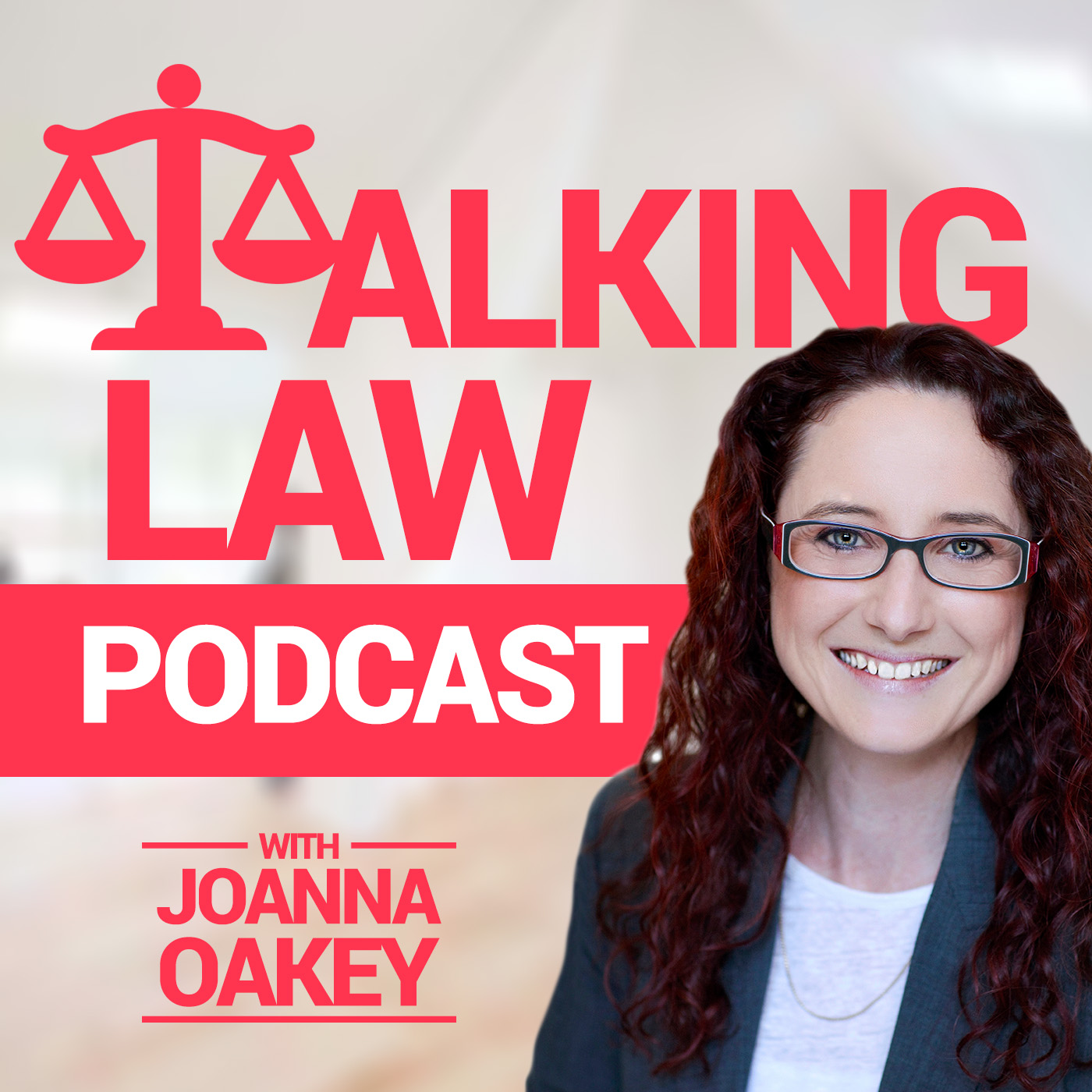
In this episode of The Deal Room Podcast, Joanna Oakey is joined by experienced business brokers Hugo Martin from ABS Business Sales and Travis Latter from Infinity Business Brokers to unpack one of the most important indicators of a successful business sale: seller motivation.
Recorded as part of the AIBB Best Practice Forum (Due Diligence), the conversation explores why understanding why a business owner wants to sell can reveal whether they are truly ready for a transaction — or whether there may be hidden risks ahead.
Joanna, Hugo and Travis share practical insights from real deal experience, including:
- How emotional factors show up during the sale process
- Why trust between advisors and sellers is critical
- How transparency during due diligence can make or break a deal
They also discuss how brokers, lawyers and accountants can work together to guide sellers through what is often one of the most significant and emotional transactions of their lives.
If you advise business owners, broker deals, or are considering selling your own business one day, this episode offers valuable perspectives on recognising potential deal risks early and managing the human side of business sales.
TUNE IN NOW
ABOUT HUGO MARTIN
Hugo Martin is a Business Broker and Registered Business Valuer with over 18 years’ experience in business sales, acquisitions and mergers. Based at ABS Business Sales, he has advised across multiple industries and is recognised for delivering high-value transactions with discretion. Hugo is a Queensland Business Broker of the Year award winner and a finalist in the REIQ Business Broker of the Year.
Connect with Hugo Martin:
- Linkedin page: https://www.linkedin.com/in/hugobmartin/?originalSubdomain=au
- Email: [email protected]
ABOUT TRAVIS LATTER
Travis Latter is a specialist RTO business broker with Infinity Business Brokers, having brokered over $140M in RTO sales and worked on 120+ RTO transactions. A former RTO owner and CEO, Travis is a Certified Practising Business Broker, AIBB member, and 2022 Specialist Business Broker of the Year.
Connect with Travis Latter:
- Linkedin page: https://www.linkedin.com/in/travislatter/?originalSubdomain=au
- Email: [email protected]
ABOUT THE AUSTRALIAN INSTITUTE OF BUSINESS BROKERS (AIBB)
The Australian Institute of Business Brokers (AIBB) is Australia’s leading professional body for business brokers, established in 1989. Dedicated to raising industry standards, AIBB supports its members through training, professional development and a strong code of ethics, helping build trust and confidence in business ownership transfers nationwide.
- Learn more about the Australian Institute of Business Brokers (AIBB), its role in setting industry standards, and member support here: https://www.aibb.org.au

0:01 Why asking “why are you selling?” reveals deal readiness
2:10 Financial and legal preparation before a sale
3:20 When sellers aren’t emotionally ready to exit
5:15 Managing emotion in SME business sales
7:05 Why a unified deal team matters
9:20 Using seller motivation to overcome deal fatigue
12:10 Informal research before meeting a vendor
14:40 Transparency as a key due diligence requirement
Travis Latter (00:00):
I’m to start with a question to you, Hugo. What’s one question that you can ask a vendor to ensure they’re ready to sell and not end up being a waft?
Hugo Martin (00:07):
Ah, good question. There’s probably more than one question, really. I mean, the first thing is to understand is the why. Why are you selling? I mean, what’s the reason behind it? What sort of timelines?
Because you’ll find someone say, “I want to sell my business. I’ve got to be out in two months’ time.” That may be unrealistic. So it’s finding out what the motivation is behind the sale.
Secondly, I would look at, once I’ve understood what that is, is looking at, are they financially ready and prepared for the sale? Ensure they’ve got their books up to date, that they’re up to date with their tax. They’ve got best statements. They’ve got all the other legal, the compliance regarding the financial situation.
Then I’d look at, are they legal compliance regarding leases, staff payments, any legal issues that might be impacting on the potential sale of that business?
Travis Latter (01:03):
Yeah, I think your first point was the clearest — is finding the why behind it.
Hugo Martin (01:07):
Yeah, exactly. It gets you it all.
Travis Latter (01:10):
Joe, what do you think? Is it one question in your experience that you can ask a vendor to ensure that they’re actually ready to sell?
Does anybody know what a waft is that’s in the crowd? It’s a new — are we allowed to express it? Good. You know what it is then. That’s all right. I said coming in — waste of something time.
Joanna Oakey (01:37):
Look, it’s a super interesting one because absolutely you’re 100 per cent right — your sellers have got to be ready to sell.
And part of, I think, what we’re really focusing on today is making sure they’re properly prepared for the sale process so everyone’s not wasting their time.
But it’s just like an interesting thing because I always start every matter with, “Why are you selling?” And I’ve had some interesting answers over time where, you know, as sellers have answered that question, it becomes apparent that actually they’re not really ready.
Joanna Oakey (02:24):
The reason they’re selling is because their wife or someone has told them that it’s time and they need to get out and be doing more holidays or something, transferring the business.
And actually my experience has been if that’s actually really clear at the beginning, like you know their heart’s not in it, at least if we all know that in the beginning, we can help as long as they’re prepared to put in the effort that is needed for the process.
It’s not necessarily a full blocker. I mean, obviously I think you have to be aware that that is something that is a red flag for a transaction that might not — where a seller might pull out as we get further down the path.
But in the times that I’ve identified this, what I’ll do is I’ll call the broker and say, “Hey, I just wanted you to know that this is what the seller’s said to me.”
Like, let’s make sure we work hard together to make sure we keep ahead of this, to make sure they are being prepared. And if they’re not going to do the work, you know, you have to realise that’s a red flag for you.
If they are going to do the work, then we can still get them through.
But I guess you just have to be aware when problems come up, it’s often coming from an emotional perspective at that point.
And if we tuned in to when our sellers are getting — because sometimes they get really caught up on certain things — if we know that that is coming from this emotional perspective, we can sort of deal with it in a different way, a way that’s a bit empathic with who they are.
So anyway, I think you just got to know at the beginning, you got to ask those questions.
Travis Latter (04:05):
Exactly. So Joe, how do you take the emotion out of a vendor’s sale?
Joanna Oakey (04:10):
Yeah. There’s always emotion, right? There’s emotion for the buyers as well.
And you have to be ready for that where the buyer, particularly if you’ve got first-time buyers, they’ve got their own emotional journey.
But for the sellers, when you’re acting sell-side, I really think the way to help keep emotion out is to make your clients, your vendors, ensure they feel like they trust you in the process.
They’ve got to feel like someone is helping guide them through it that really understands their emotion and understands the process.
Because I think emotion really — when emotion creeps up, and it will through the process — if you can help pull them back and say, “Hey, look, this is how it usually works. Hey, this is not unreasonable for the buyer to be asking for this sort of stuff if it’s not unreasonable. Hey, this is how it usually happens.”
And you guide them through, I find that the sellers find it much easier to step back from the emotion because they’ve got that trust that someone’s really guiding them through.
Joanna Oakey (04:36):
I think number one, it’s trust, but it’s also about the deal team all singing from the same hymn book.
Because emotion — we all know those transactions when you’ve got someone on the deal team, like the lawyer or the accountant or someone who’s sort of white-anting the deal in the background, saying, “Well, this is really risky,” or “This is…” — you know what I mean?
So it’s about getting your deal team together, all singing from the same hymn book, and make the seller feel comforted that this is a standard process.
Hugo Martin (05:18):
I agree with what Joanna said.
Because when you’re selling a business, it’s like most of the family is probably the second most important transaction you’re going to be engaged in.
And it’s really about, personally sit down — it’s about building trust. It’s about going through the process methodically and try and remove the emotion by bringing a bit of structure into the way that you’re going to progress the sale.
So understanding what’s likely to occur, how the process will work, what’s a likely buyer likely to ask for. Like Joanna said, what’s reasonable, what’s not.
Hugo Martin (06:43):
And so I think this way actually used it — sorry, you go, go.
No, no, no. It’s about taking that bottom but bringing it down to steps by putting a logical process in place.
And for them to buy into the fact that you are the person who can do this, you’re the expert, you’re the one who can guide them through this process and end up with a success.
Hugo Martin (07:14):
And I think it’s important to understand what the emotion is because there’s a time where you can use that. You can use that in the deal.
Like for example, when deal fatigue is coming in, there’s nothing better than pulling back to that first conversation to the vendor and saying, “Remember why you’re selling. You’re selling this so you can spend time with your grandkids.”
So you’re using that emotion in a positive sense to reinforce where you’re at in the transaction because it’s a clearly marked process.
Travis Latter (07:43):
So my last question on emotion is — should brokers ever take on a listing? Just a real short answer. Should brokers ever take on a listing when they know the vendor is not emotionally ready?
Hugo Martin (07:56):
Shall I answer that first? Yeah.
My logic is you’d say no. But sometimes you have to — certainly if the vendor comes to you through a referral, or is a friend of someone who you’ve done a lot of business with — then you will engage them and say, “Okay, you may not be emotionally ready, you may not be ready at this moment in time, but we can structure a plan and come to a timeline.”
So that when I can advise you when I think it’s the opportune time, then we can go to market.
Sometimes you can’t just say no when you sometimes would like to.
Travis Latter (08:36):
And I’ll stay with you, Hugo, on this next question. How do you do an informal DD on the vendor and on the business without them — you know, without asking for anything?
Because I believe that the more when you go into that first meeting, the more you know about the business, the better you’re going to do. You’re going to save time.
Hugo Martin (08:56):
I do market research on the people. Try and find out who they are. Use AI. Use a whole heap of instruments to see what’s out there in the marketplace.
That’s really what I do. I do a full DD on them as much as I can, know as much information about them as I possibly can.
And sometimes I’ll know people who know them. So I’ll informally ask a few questions.
And there’s a great tool called Crystal Knows — I know I’ve mentioned it before — but if they’ve got a LinkedIn profile or any social media, put them into Crystal Knows and you’ll know exactly all about them.
Joanna Oakey (09:55):
No, I was just going to say — I guess most people know I’m sort of heavily down the AI angle, but this is an awesome thing to have a custom GPT around to then run a deep search to pull up all of this detail.
Because these days you’ve got tools that can do it all for you in a blink of — blink of crazy.
Hugo Martin (10:21):
One of the most important questions I’ve started asking — and it’s had a pronounced result — is, “Have you ever sold a business before?”
I think that question alone buys you so much information. You know exactly how to pitch to them. You know exactly where their fear is. You can understand emotion better.
And it’s a very, very simple question.
Have you ever sold a business before?
If they say yes, you can say, “Was it a similar business? How was your experience? What did you like? What did you not like?”
So you can get a lot of information when you’re speaking to the vendor about that one question.
Travis Latter (11:08):
Good question.
How do you handle a vendor — and this is to both of you — who insists that some details are private at the engagement stage?
So you haven’t listed it yet. You’re still trying to understand the value of the business and they go, “Don’t worry, some details are private.”
How do you get past that?
Joanna Oakey (11:28):
Yeah, no — like I won’t allow that answer because for me, I can’t do my job if they’re keeping things.
So I think maybe sometimes the conversations with brokers might be different with us.
For me, it’s a huge, massive red flag and I then need to get to the bottom of why it’s there.
I actually have said at times we can’t act for these clients anymore if there’s that sort of response and I can’t get to the bottom of why.
Because we talked before about the issue of sellers not being ready for sale, and I think that’s a red flag, but that’s surmountable.
What is not surmountable, I find, is if a seller isn’t being truthful and it breaks trust in the relationship, in the deal.
Hugo Martin (12:40):
From my perspective as well, I always say there’s no secrets. There’s no secrets.
I always ask them, “Is there something I ought to know about this business that you may not be telling me?”
But I say, “I have to know everything. I have to have a full understanding of what the drivers are, if there are any roadblocks, if there are any issues historically or that might be on the horizon.”
Otherwise I can’t do my job.
Joanna Oakey (13:42):
And sometimes there might be two reasons for that sort of response.
One, like there’s a real problem and there’s something that’s being hidden, which is an absolute problem.
Or two, there’s sort of this emotion side.
Because sometimes sellers are just worried that they’re under the microscope, particularly if they’re selling to a corporate and they see that there’s a power imbalance.
And it’s not just the founder owner — sometimes it might be also the team, like their accounts or whoever’s involved in the due diligence process.
Joanna Oakey (15:00):
So it’s about understanding where it comes from, helping them across that emotional barrier, and getting them to understand the buyer isn’t assessing them as a person.
The buyer is assessing the business.
And when you switch that around, suddenly they become a lot more free with the information and things speed up.
Travis Latter (15:38):
Hugo, have you got a time where you’ve said no to a client, like a prospective client?
Hugo Martin (15:42):
Yes. I’ve sacked the client.
Because I found out that they were doing things that I found were illegal, basically.
So I said, “No, I’m not prepared to deal with you in this situation,” and terminated my appointment.
Disclaimer:The material contained on this website is provided for general information purposes only and does not constitute legal advice. You should not depend upon any information appearing on this website without seeking legal advice. We do not guarantee that the contents of this website will be accurate, complete or up-to-date. Liability limited by a scheme approved under Professional Standards Legislation