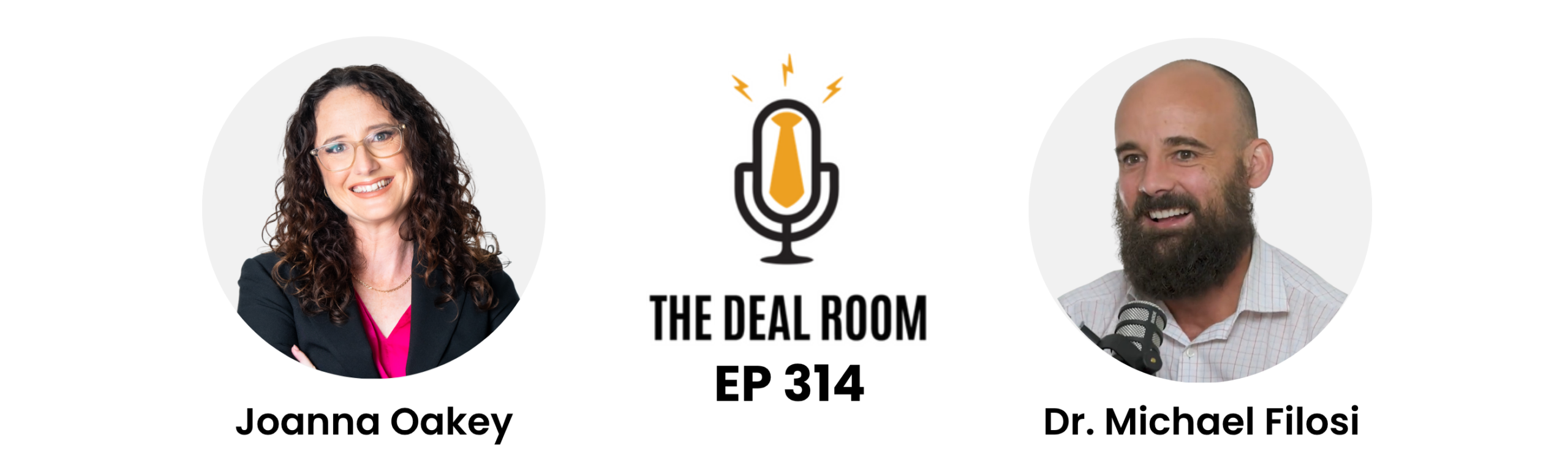
In this episode of The Deal Room Podcast, Joanna Oakey continues her conversation with Dr. Michael Filosi, who built a struggling dental practice into the biggest in Adelaide before selling to private equity in 81 days flat.
In this episode (Part 2 of a 2-part series), they cover:
- What Michael would check before buying a business himself
- Why respecting a seller’s legacy matters as much as the numbers
- The key person questions he’d ask before buying any business
- Why transparency from a seller is worth more than a rosy forecast
- What he’s doing with his time since the sale
If you missed Part 1, go back and hear how Michael built the practice to sell in the first place. This episode flips the lens, useful listening whether you’re buying your first business or your fifth.
Tune in now on The Deal Room Podcast.
ABOUT DR. MICHAEL FILOSI
Dr. Michael Filosi is a dentist who bought a struggling dental practice in Adelaide in 2015 and spent 10 years building it into the biggest dental practice in the city, growing the team from 5 to 35 people. He deliberately stepped back from clinical work to run the business rather than work in it, taking his own share of practice billings down from 40% to 0.6% before he sold.
He sold the practice to a corporate buyer backed by private equity, in a deal that closed 81 days after his first conversation with his accountant, with no clawbacks, no earn-outs and no retention period. Michael ran the sale process himself, without a broker, mapping out the private equity firms active in his market before he made an approach. Since selling, he’s taken time to recharge and is now looking at further study in orofacial pain.
Connect with Dr. Michael Filosi:
- LinkedIn: www.linkedin.com/in/michaelfilosi
- Website: https://michaelfilosi.com.au/
Episode Highlights
0:00 – Podcast Introduction
0:25 – Joanna’s Welcome and Episode Overview
1:45 – What Michael Would Check Before Buying a Business
3:51 – Respecting a Seller’s Legacy
6:44 – Reflecting on the Winning Bidder and the Runner-Up
8:53 – What Michael Would Do Differently as a Buyer
11:18 – What Michael Is Doing Since the Sale
13:06 – Michael’s “Very Very” Self-Description
13:57 – Closing Thoughts
15:04 – Outro
Note: this transcript was generated automatically, so it will contain errors. It’s here as an easy way to scan for anything relevant to you, not as a word-perfect record of the episode.
(0:25) Joanna Oakey: Hi, it’s Joanna Oakey, and welcome back to The Deal Room Podcast, a podcast proudly brought to you by our commercial legal practice, Aspect Legal. In this episode, part two of our two-part series, I’m picking up my conversation with Dr. Michael Filosi, founder of Fullerton Park Dental. If you missed part one, go back and hear how he built the business to sell. In this episode, we cover his tips for being a good buyer, now that he understands as a seller what he was looking for, why respecting a seller’s legacy matters as much as the numbers and what he’s doing with his time since the sale. So let’s dive in.
(1:03) Joanna Oakey: Fascinating. You talk about this disassociation. Again, that’s actually quite unique. I feel like that usually is quite a process, not a way, but in many instances. So I guess sort of flipping our hat right now, because we have a lot of buyers who listen to this as well as sellers. So just when we’re looking at it from a buyer’s perspective, you know, if you were a buyer right now of a business, any kind of business, what is it? How would you approach the acquisition process knowing what you know now about that theme of the seller’s journey in the sale process?
(1:45) Michael Filosi: It’s a really good question. I think I’d kind of flip it on its head. So flip everything I’ve learned from one end and go the other way. So I would want to look, and bearing in mind I was a buyer at one point too, you know, like I did buy a practice when I, you know, I bought a rundown one. So for me, it’s got to have potential upside, but you also shouldn’t have to pay for that upside, right? So I think that when people try and go, it could be this, could be that, could be something else, they go, well, look, you’ve been having it, you know, you’ve owned it for 20 years and none of those things have come to pass. So I can only buy what it is. I can’t buy the potential upside, but I’d want to see an upside that I could get, but not be paying for it. That’d be the first thing. I think, again, clean books. You’d want to basically, the price of any business is like the EBITDA times by a multiple. And the multiple determinant of that is the risk. What risk am I taking on? So, the practice, the business that I bought was super low risk. I could see exactly what I was getting and what I wasn’t getting. So, I think that you need to be super transparent and be exceptionally clear, on what it is that you’re buying and what that looks like. So the more transparent the seller is, the better, I think. So if I was going as a buyer, if they felt like trying to hide stuff and those sorts of things, then that would put me off in a big way. So I think, and then yeah, removing key person dependency. So if you’re buying yourself, so sometimes in dentistry, often you’re actually buying a job, right? So you’re taking over from another dentist and that’s a different situation. So if you can go, do you know what? This dentist retire i’m going to come on board and work in his place or her place that’s a different situation you’re still buying the business technically but you’re kind of buying the job right you’re buying his or her patient base whereas if you’re buying a true business you need to be very very sure that you know who are the key people here and and who relies on them and and if they go what, what state am i in so that would be the other reflection is i’d be asking some crucial questions about that be that the delivery of the actual, you know in terms of delivery during the business like who’s delivering this service you know who are the key people and then the management as well and you need some sort of assurance that the key people weren’t going anywhere or that it was a turnkey solution that hey if they did leave we can then um you know still, find a way to function because i’m paying a lot of money for it.
(3:51) Joanna Oakey: Um, so two things. Firstly, what about the emotional piece? So we’ve talked about, you know, how as a buyer would you call that component?
(4:04) Michael Filosi: You’ve got to respect their legacy, right? And that happens a lot in professional services. Often it’s, um, you know, dentists or lawyers or doctors or other people that they’ve worked hard, it’s their baby and they want to see that respected. So I think it’s really important to be clear to them that look, you know, I want to take care of it. I do want to look after it and I’m going to honor your name and your contribution. And sometimes they know things have gone off the ball a bit, but they don’t want that pointed out to them or to the prospect of people. So you see in dentistry sometimes where maybe they’re not quite doing the same quality work as what they used to, but they want to feel that, look, this person is not going to run the bus over me as soon as I’m gone with the new people. So I think that’s really important is be respectful of that legacy and kind of even allude to or be honest about, look, I understand that there’s some things here that weren’t ideal and that’s okay. I get what I’m getting and I want to be really clear that to your staff to the the customers and things that your legacy will be respected you’ll be honored and your contribution will be absolutely honored so I think that’s the emotional part where they feel more comfortable with that I think that’s a big big thing um, you know like even for me right even though like it’s funny the one that I didn’t want to sell to he was the one who was in and out as fast as could be and and it did it was nice the other ones they could see what I’d done and they were like wow this is really cool they said all the right things, whereas that other guy, he was. The one who put in the highest offer as well, which is odd, but he didn’t spend the time demonstrating an appreciation for what I’d done, to be honest. These things matter. They do. I think as a potential buyer, you need to honor that. You know, it’s funny when people come in and all they’ll talk about is their own business and you’re going, oh, you’re here to look at mine. Like, if you’re just going to tell me how good you are, you know, so I think just, just be, be mindful of that, be sensitive to those things and, and kiss the ring, you know, like bow down and kiss the ring and show appreciation and, and honor that. And it goes a long way to building those relationships. And again, it’s a negotiation, right? So if you can demonstrate you’re acting in good faith, that you’re going to do the, you know, just those starting points, those small things. We had one, actually one group, it was interesting. In the video, there’s a picture of me eating a donut when I was chopping down this tree, right? So she came in with like a big thing of donuts for all the staff. And she was like, and it’s really clever, you know? So she wanted to demonstrate, hey, I watched your video. You know, I paid attention to it. I know you like donuts. Here’s some donuts. And it’s very clever, you know? And it showed that there was that sense of like, you know, you’re not just a line on my budget or a line in my email or a meeting on my calendar. Like I get you and I get what you’re about and I get what you’ve done. So small things like that, I think, demonstrate that, hey, this person doesn’t just see me as being a profit and loss, that there’s something else there.
(6:37) Joanna Oakey: It’s a really, really interesting and important point, I think, made there. Were they the winning bidders?
(6:44) Michael Filosi: They weren’t. No, they were the ones that, to be fair, they were one who said, we’re just not in position to sell. Oh, okay, right, okay. But in the end, they said, but actually, I’ve actually caught up with her a couple of times since. She’s a lovely lady, and so I’m still in touch with her. So, yeah, so it wasn’t, that didn’t, like, they very much acted in good faith, but they were the ones who called me and said, look, we’ve just brought out this other group, and honestly, like we won’t have an offer ready for four months, you know, and I said it will be sold by then. So, that were the ones actually that I ended up saying, look, who should I sell to? Like of the rest, the other three, who’s the surest set of hands? So, but I’ve actually had more to do with her than the others since. And now, interestingly, I’m trying to help with potentially finding some other things for them to buy. So, you know, all these things carry weight of like I’ve got some other friends and colleagues and things. So, you know, all these things matter. You know, those relationships matter and you might not get that deal, but maybe you’ll get the next or maybe I’ll be the one who puts her in touch with the person that she gets the next. So, acting good faith as being a good person and you know and none of them acted badly right like even the one that didn’t like he was fine you know but it was just that sense of like people are people we buy from people we sell to people and we’re really good judges of character and we’re really good so yeah i think you would have seen a lot jonah but, jonah yeah so i think showing that care consideration for the other party is, uh is important and you don’t have to be sycophantic about it but i think that people want their legacy honored and they want what they’ve done to be acknowledged, and that goes a long way to sort of forming the foundation for the negotiation to sell.
(8:06) Joanna Oakey: I think, yeah, absolutely. I think what you’re touching on here is, you know, there’s an important EQ element.
(8:13) Michael Filosi: 100%.
(8:14) Joanna Oakey: You know, so I’m really glad you called it out. Now I’ve got, I said there were two questions. So my second question in particular from buy side, going back to the first elements that you talked about before we got into the emotional side and EQ side of the buyer, which were more, you know, more in relation to the financials and the cleanliness of the, you know, financials and business itself, et cetera, et cetera. When you bought your business, however, I suspect the business didn’t tick all of those boxes you were talking about, but you’re a different type of buyer than the buyer you were looking for.
(8:53) Michael Filosi: A hundred percent.
(8:54) Joanna Oakey: So let’s talk to that buyer now. Sure. Do you think you did well? Anything you didn’t do well? What are your reflections on that early process?
(9:02) Michael Filosi: I was buying low and I knew it. So I think that it’s a good question. I didn’t pay an enormous amount it was still money you know like it wasn’t like I paid pocket change but, the risk you know I knew what I was getting and and the risks were all in front of me you know there was the hole in the wall with the fur in it like I could see it needed the work done right so I could very clearly see the risks but I think one thing I would say if I was in my shoes is look at the things that other people don’t see so a lot of other people looked at their practice thought too hard but maybe they didn’t I asked to see the appointment books and they weren’t on a computer they were literally. Paper and pencil and i flicked through and there was lead pencil as far as the eye could see he was busy like super duper duper busy and i was like wow there’s a lot a lot of patience a lot a lot of demand here i can build with that so i think i talk about my spirit animal as a boa constrictor i’m like i see the risk and squeeze the life out of it right so i think for me i was like look other people didn’t think they could do it but i was like well it’s not that hard to like you know you’re gonna throw a bit of money at it but I can do this place up, but the fundamental thing is you have the nicest practice. You’ve got no patience. Like you’re going to go broke. Whereas this place had patience. As far as I could see. So like, I think the question as a buyer is like, you know, what can I see that others can’t? Where’s the upside that it’s the asymmetrical risk, right? It’s like, what’s the ultimate downside here, right? And you want to have asymmetric risk that the potential upside is enormous and the potential downside is capped. So I think I had that. The potential downside for me was I’d do my dough, right? The money I spent on it, just you’d lose it. And that would not be good, but it wasn’t going to be bread and water for life, you know, whereas the upside was enormous. And I think that I was able to identify that. what looked other people, and a lot of other people looked at that and they just thought it was too hard whereas I think if you can see past that and go look, the the bones there like it can be done um it’s whether you’ve got the the appetite for and the skills and I think I talk about like a trapeze artist like that looks risky as heck to me right I’d never get up there but for them like they’ve trained for it they’ve done all the safety they’ve got it all there so it’s actually not that risky for them so for me for others saw and thought it looks super risky like why would I buy this place. But for me, I was like, well, you know, I can figure that out and figure that out and figure that out. So it never felt risky. I could see the risks right in front of me. So I think if you can see something that others can’t and make sure it’s there, make sure it’s based on something, not just speculative, then that’s a good, good start.
(11:18) Joanna Oakey: Love it. So one very big question, Michael, what are you doing with yourself now? So how long ago was the sale?
(11:26) Michael Filosi: Yeah, sure. 11 and a half months ago was the sale. So I’m sort of, I know before we came on here, you asked how my day was and I sort of said oh look honestly like pretty chilled like they’re all pretty easy going these days I said you know I had coffee with my wife I went to the gym so, life is good I needed a bit of time to to decompress a fair bit, um so now I kind of I’m interested in hard interesting meaningful things that kind of is what appeals to me so for me scaling a dental practice from small to big was a hard interesting meaningful challenge so, what am I doing now um I’m looking at maybe going back and doing some more study in orofacial pain So sort of doing that, that’s one thing. I do like to write. So I write a lot on LinkedIn. I used to write for a whole lot of magazines and newspapers and things. So I post a fair bit on LinkedIn thoughts on business and life. And politics is the other one. So I kind of, I’ve just got back from a. I got accepted into a program for people who’ve achieved things in life and then looking at potentially moving into public service. So that’s something that very much feels like a hard, interesting, meaningful problem to me. So that’s something that I’m sort of going to chip away at and see where that leads. So they’re kind of the things, but it’s taken a long time, you know, like it’s only like literally the last month or so. I feel like I’ve started to get some traction in terms of what to do next. You know, you have all these ideas and I did need a break like a genuine break but I just feel now like the path is getting a bit clearer which is cool so yeah it’s not easy you know the exploring versus exploiting when you own a business you’re exploiting every day you go back down the mineshaft you chip away a bit more at where you got to at night you come up next day you straight back down you keep exploiting that whereas now I’m, exploring you know you’re trying to find a new mineshaft to dig. And a lot of them don’t lead anywhere so but I feel like I’m starting to get a bit of traction with that starting to get a few ideas so it’s yeah what’s this space but uh yeah it’s good fun.
(13:06) Joanna Oakey: You’re definitely not someone who is gonna sit still
(13:09) Michael Filosi: Like, no I think you I think you might have nailed it yeah that’s right so yeah.
(13:16) Joanna Oakey: Yeah sorry keep going
(13:17) Michael Filosi: No yeah it’s yeah I think I’ve only kind of you know intense is a word that comes up a lot right when people used to describe me you know like I I ran, a I ran a LinkedIn post yesterday actually about you know everything I have I have a book I’m gonna call it the very very because everything in my life is very very right I’m very very tall the things I’m good at I’m very very good at the thinks I’m bad at I’m very very bad at so everything is one extreme or another every personality type typology I’m always like pushing at one end it’s never no middle ground so yeah look it’s good though to have a direction of where to put all that energy into I think the tricky thing is if you don’t have that it’s like well you’re full of beans but what do I do with it whereas now it’s like I can see how this can play out now and I can see a path forward so I’ve got yeah I’ve got something to do.
(13:57) Joanna Oakey: Oh, Michael, I cannot wait to see where you are going on that path. What a fascinating discussion, such a fascinating journey. And look, you just, it’s interesting how spot on you are in so many of the things you’re talking about. I’m just, I’m just amazed, actually. It’s like, I feel like you’ve hit on things that, you know, I’ve been in this industry seeing people selling and buying business for about 25 years now. I don’t think, like, you are so spot on in the trends. So, anyway, like, I think this is important for our listeners, our buyers, our sellers, everyone who’s in the journey. I just hugely thank you for coming on board. It was just such an enjoyable discussion.
(14:44) Michael Filosi: Very much the same. I’ve really enjoyed it, Joanna. It’s been a really cool chat. So, yeah, I’ve been looking forward to this. I had it in my calendar and couldn’t wait to do it, and it’s lived up to every expectation. So, thank you very much for having me.
(14:54) Joanna Oakey: Well, thank you. And let’s keep in contact. I really want to know where you’re popping up next.
(15:00) Michael Filosi: Happy days. Let’s do it. Love it.
(15:02) Joanna Oakey: Cool. See you, Michael.
(15:03) Michael Filosi: See ya.
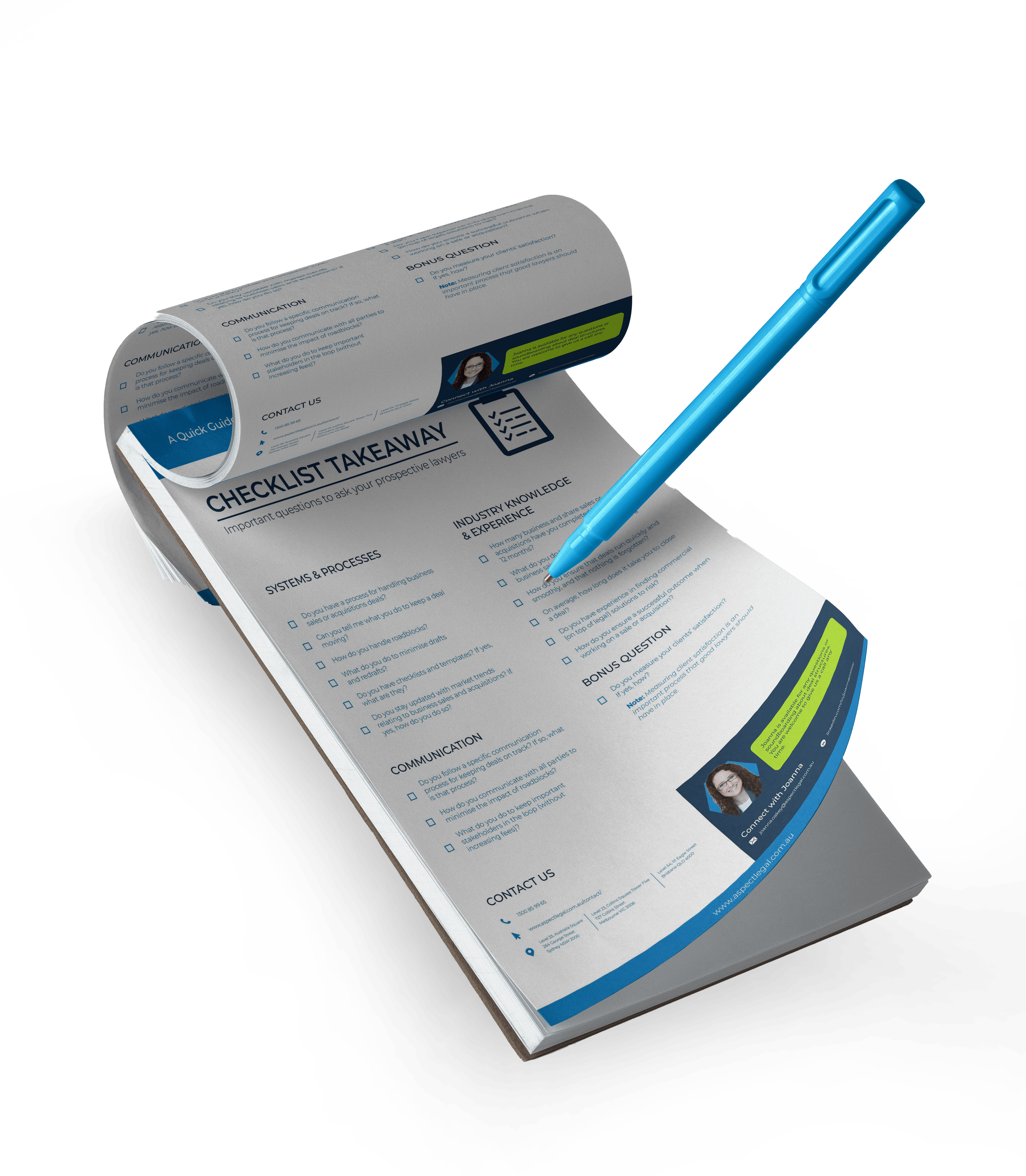
(15:04) Joanna Oakey: Well, that’s it for part two of this conversation with Dr. Michael Filosi. If you haven’t caught part one yet, go back and hear how he built the practice to sell in the first place. We’ve put together a free exit readiness checklist, pulling together the exact things Michael built into his practice to make it sellable. And if you haven’t read our best-selling book, Buy, Grow, Exit, which Michael mentions in this series, there’s a link to both of those in the show notes below. You’ll also find Michael on LinkedIn. The link is in the show notes too. Well, thanks for listening.
(15:39) Announcer: You’ve been listening to Joanna Oakey and The Deal Room Podcast, proudly brought to you by our commercial legal practice, Aspect Legal. See you next time.
Disclaimer: The material contained on this website is provided for general information purposes only and does not constitute legal advice. You should not depend upon any information appearing on this website without seeking legal advice. We do not guarantee that the contents of this website will be accurate, complete or up-to-date. Liability limited by a scheme approved under Professional Standards Legislation