Podcast: Download (Duration: 29:31 — 23.6MB)
Get notified of new episodes: RSS
This episode of The Deal Room Podcast looks at getting a dental practice ready to sell. Carl Burroughs of Professional Practice Sales joins Joanna Oakey to explain where AI is already changing dentistry, what being transaction ready actually means, why deals are taking longer, and the 2 things every practice owner should do before they sell.
In this episode of The Deal Room Podcast, host Joanna Oakey is joined again by Carl Burroughs, Founder and Director of Professional Practice Sales, for a practical follow-up conversation on getting a practice ready to sell.
In this episode (Part 2 of a 2-part series), they dive into:
- Where AI is already changing dentistry, from robot-assisted implants to an AI agent answering the phone
- What it actually means to be transaction ready, and why so many deals fall over on documentation
- Why deals are taking longer than they used to, and what buyers, sellers and their advisors can do about it
- The 2 things Carl tells every practice owner to do before they sell
This conversation is packed with insight for practice owners preparing for a future sale, and for advisors helping clients get transaction ready. It’s a practical, no-nonsense look at what actually speeds up a deal, and what holds one back.
Don’t miss this practical and timely discussion, tune in now on The Deal Room Podcast.
Catch Part 1 first if you haven’t, where Carl and Joanna cover the 2026 market for dental practice sales.
ABOUT CARL BURROUGHS
Carl Burroughs is a serial entrepreneur, marketer and practice sales specialist with more than four decades of experience creating, growing and selling businesses. He built one of the UK’s first integrated estate agency and legal businesses in the late 1980s, then moved to Australia in 1993, where he grew a telecommunications company to 26 retail outlets across 3 states.
In 2001, Carl founded Integrated Dental Marketing, Australia’s first agency dedicated to the dental profession. In 2007, he became a founding partner of Dental Partners, helping grow the group to more than 40 practices before its sale to Abano Healthcare, which later became Maven Dental. Carl has also personally bought, grown and sold 3 dental practices in Queensland.
Today, Carl is Founder and Director of Professional Practice Sales, a brokerage specialising in the sale of dental and veterinary practices across Australia – his vision is to build the country’s leading brokerage for professional practices, expanding into legal, accounting, medical and other professional service sectors.
Connect with Carl Burroughs:
- LinkedIn: linkedin.com/in/carlburroughs
- Email: [email protected]
ABOUT PROFESSIONAL PRACTICE SALES
Professional Practice Sales is a specialist brokerage focused on the sale of dental and veterinary practices across Australia, with a vision to become the country’s leading brokerage for professional practices.
- Learn more about Professional Practice Sales here: www.practicesales.com.au
- Professional Practice Sales on Facebook: facebook.com/Professional-Practice-Sales

Episode Highlights
0:00 – Intro
1:39 – Where AI is disrupting dentistry
2:34 – From robot-assisted implants to an AI agent on the phone
10:40 – What it actually means to be transaction ready
11:29 – Annual reviews, normalised accounts and setting up a data room
14:29 – How slow documents erode a buyer’s trust
16:24 – Preparing in bite-sized chunks, from equipment registers to serial numbers
18:54 – Why deals are taking longer
20:58 – Getting buyers and the deal team ready, and why lenders love a business plan
23:59 – The 2 things every practice owner should do before they sell
25:49 – How to get in touch with Carl
28:06 – Outro
FREQUENTLY ASKED QUESTIONS (FAQs)
Q1: What are the 2 things every practice owner should do before they sell?
Carl Burroughs says, first, set up your data room: your lease, an equipment register and up-to-date accounts, all in one place, so an advisor can tell you what’s missing. Second, write a business plan. He suggests doing it a paragraph a week with an advisor asking the hard questions, such as what happens if a key staff member leaves.
Q2: What does it mean for a dental practice to be transaction ready?
Carl Burroughs says it has 2 parts. Even with no plans to sell, meet your advisors each year, keep everything up to date and normalise your accounts to see true profitability. When you do sell, have a data room ready for due diligence, because disorganisation is where he sees deals drag on or fall over altogether.
Q3: Why does being organised get you a better price?
Carl Burroughs says answering a buyer’s question straight away, with the document already on file, makes you look professional, speeds the deal up and ultimately gets you a better price. Joanna Oakey adds that when documents are slow to arrive, buyers lose trust and push for more warranties and a bigger holdback.
Q4: Why are practice sales taking longer right now?
Carl Burroughs says lenders can take 2 to 3 months to come back with an answer and are asking for more information than ever, while busy lawyers and accountants add to the delay. It’s not unusual for settlement to take 6 months or more after a buyer is engaged, even on simple deals.
Q5: How can buyers speed up getting finance for a practice?
Carl Burroughs says buyers already know what a lender needs, so they should prepare it all in advance and present it in one go rather than piecemeal. He also recommends giving the lender a business plan for the practice, including contingencies like losing 20% of revenue. Very few buyers do it, and it shows them in the best light.
Q6: How is AI already being used in dentistry?
On the clinical side, Carl Burroughs says aligner therapy is already largely AI-driven, robot-assisted implants are arriving, and he expects more of this technology in practices within 2 to 3 years. On the admin side, he says AI can take tasks done manually for years, like rostering, and turn them around in moments.
Q7: Should a dental practice use an AI agent to answer the phone?
Carl Burroughs recommends it. He says the front desk is the least efficient part of most practices, with one receptionist torn between the patient in front of them and a ringing phone. Around 70% of calls are to book another appointment, which an AI agent can handle very well.
Note: this transcript was generated automatically, so it will contain errors. It’s here as an easy way to scan for anything relevant to you, not as a word-perfect record of the episode.
(0:00) Announcer: Ladies and gentlemen, Good evening. Are you ready? Okay, here we go. You’re listening to The Deal Room Podcast. Join us as we bring you the inside scoop on business sales and acquisitions. Get across trends in the area and hear the industry’s best.
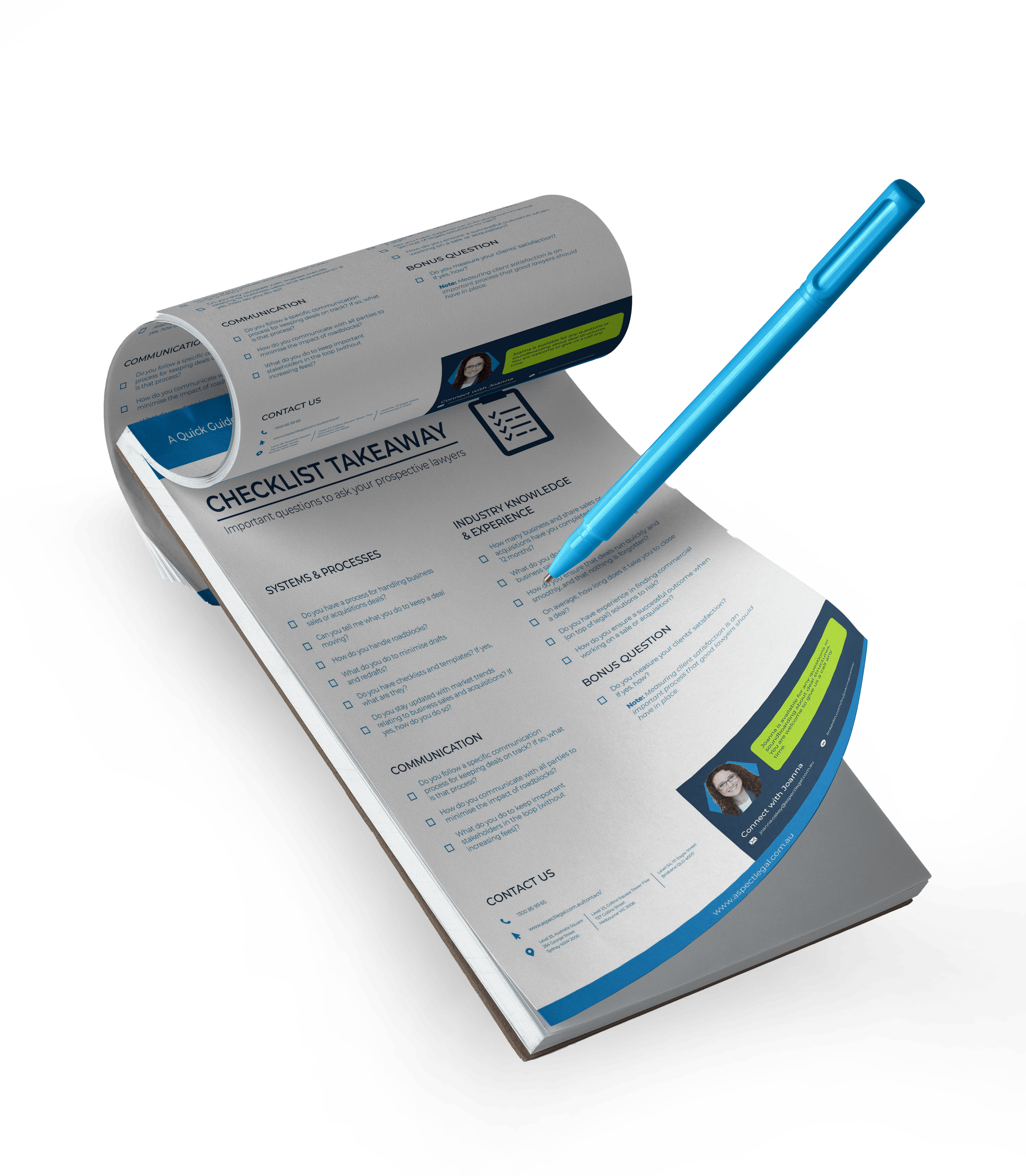
(0:24) Joanna Oakey: Hi, it’s Joanna Oakey here and welcome back to The Deal Room Podcast, a podcast proudly brought to you by our commercial legal practice, Aspect Legal. Now, in this episode, we have part two of a two-part series with Carl Burroughs from Professional Practice Sales. Carl’s been buying, building, and selling dental practices for more than 25 years, and we get practical today covering how AI is already transforming dental practices, what transaction readiness actually looks like and the two things every owner should do before they sell. Now, if you haven’t listened to part one, don’t forget to go back to part one where you found this podcast and listen in to that. And if you are running a dental practice yourself or advising a dental practice, we also have a free practice sale readiness checklist in our show notes. So just go to our show notes to pick that up. But for now, let’s get into this episode because this one’s packed. Let’s get going with Carl. Carl, it is an absolute pleasure. Welcome back to The Deal Room Podcast.
(1:37) Carl Burroughs: Thank you for having me.
(1:39) Joanna Oakey: Always, always my pleasure. Okay, so we recorded an episode recently where we talked all about the future of dental practice ownership in Australia. But I thought it would make sense that we round this out with talking about how to prepare your practice, not just for the future, but also for a successful sale into the future. So we’ve got lots and lots of things that we should be touching on. But I want to start with AI. One of my favourite topics right now. But AI in dentistry, what are you seeing as the disruptors in AI in dentistry? I think in good news, we haven’t got robots actually doing our dentistry at the moment. Or doing. What are you seeing?
(2:27) Carl Burroughs: Well, I’d correct you because we do.
(2:31) Joanna Oakey: Okay. Take me through it. I’m ready to be corrected.
(2:34) Carl Burroughs: Carl. It’s already happening, and I feel that it’s a wonderful thing for lots of things for society. So, you know, I know you’re obsessed with AI. It’s an exciting time. I don’t really understand why people are sort of fearful of it, because I feel that, you know, if you embrace some of the technology, then our lives will be enhanced. And I don’t see that it’s going to create mass unemployment in particularly different areas. I think it’s going to create more opportunity. However, in dentistry, it very much falls into… Uh, two camps, there’s the administrative, and then there’s the clinical. Uh, the clinical is moving at lightning speed. So you mentioned we don’t have robots doing dentistry. Well, we do, uh, already it’s already happening and, uh, it, but it’s in its infancy, um, and there’s amazing technology that’s going, coming on. A lot of it’s coming out of the, the, the States at the moment. But where that will be of benefit, and this is, you know, healthcare in general, is where people can’t access really high quality healthcare currently. So even in Australia, you take somebody in a remote part of Australia And they need some, you know, high quality dentistry done, then that’s very costly for them to move to a capital city for that period of time. Often dentistry can’t be done in a single day. It has to be done over a number of weeks for different reasons. So that becomes a real barrier. Now, if you can go into your nearest practice in a sterile environment and a high quality surgeon can be doing that dentistry from a capital city via a computer, that’s going to be a good thing. And I think that applies to, you know, heart surgery. It applies to, you know, all sorts of different aspects of our health. So I can’t see anything but positive outcomes from that side of it. However, it is in its infancy. There’s a lot of things that are getting played with at the moment. I see those things coming into mainstream as early as two to three years time, by the way. I don’t think it’s decades. I think where we’re at at the moment is the half-life of everything is just speeding up and speeding up. So I think some of that technology will actually be within practice quite soon. And it will probably start with things that are less invasive. So for instance, aligner therapy is very much AI driven already. You can scan a patient’s mouth with a 3D scanner and you know that is already getting diagnosed by AI and AI is already coming back and saying these are the aligners that you need to use for the next six months and these will straighten your teeth Very little can go wrong with that because if they get the diagnosis wrong, it’s not life and death. Possibly a little bit different with, you know, things that are more invasive like implants. But we’ve had sort of laser-driven implants for some time. And now what we’re moving to is robot-driven implants. And, you know, the robot is not going to have, you know, a shaky hand. The robot is not going to position that implant anywhere other than where it’s been designed to be. And the person who designs where the implant goes is going to be a dentist. So they’re not out of a job. They’re just utilizing another piece of equipment. So again, I see that has been very positive for patient outcomes and for practice owners. They will be able to do more work. Ultimately the cost of dentistry may come down a little bit through this technology maybe not in the short term because the technology is going to be expensive but you know look forward 10 years you may find that people who need implants who currently can’t afford them probably can access implants at a lower cost which again at a society level at a human level it’s got to be a good thing Absolutely. So that’s the clinical. The administrative is the same for all of us. And this technology is available today. You’re utilizing it in your business. I’m utilizing it in my business. And it’s been quite revolutionary for me, particularly in time frames, getting things turned around quickly. And the dental practice is no different. So, things that are done in a manual way can certainly be engaged through AI. Simple things, I did a friend’s roster yesterday, just as a favor. They’ve been doing their rosters for, you know, manually for years. And I threw it into Claude and I said, look, here’s your roster for the rest of the year. And you can change it, update it as you wish. You know, create a lovely form. They not, this particular person isn’t very good in Excel. I didn’t create it in Excel. I created it in their HTML form for them. Well, I didn’t do any of that, of course. You know, I’m not a programmer. I just got Claude to do it. And in a few moments, they had a better system. And, you know, that can be extrapolated to every aspect of practice. The one aspect of AI I would really encourage practice to consider is an AI agent for the phone. So having bought and run and sold practices for myself, so I’ve been the other side of the counter for, you know, hundreds of hours. Probably the least efficient aspect of a dental practice is front desk when the phone rings. So, you know, we’re all taught that we have to look after the person in front of us more than anybody else. And I think that’s true. If somebody’s privileged enough to have a customer in front of them, you want to give them your absolute attention. Most smaller dental practices have one receptionist, the phone rings, they have to answer that phone, that could be anybody, it could be a patient wanting to book an appointment, it could be a supplier trying to sell something, it could be anybody, but that takes away from the relationship with the patient who’s in front of you. An AI agent answering that phone is going to do an infinitely better job than a human in that environment now if the practice is empty and there’s nobody there and the phone rings the human is going to do a really good job of it but if that human is under stress trying to print out a receipt trying to take payment trying to rebook a patient they’re not going to be the best on the phone as well where an AI agent is and the quality of the AI agent now is incredibly high. Most people are looking for a transaction. 70% of phone calls coming into a practice are to book another appointment. The agent is going to do that perfectly. No different to booking a restaurant. You know, my favorite restaurant where I live, I never think about going there until about 11.30 on the day that I want to go. They’re already busy. You know, so I’m ringing them. You can hear the pots and pans being chinked in the background. I’m asking for a table at one o’clock. You know, I don’t need to speak to them. I just need to know if there’s, you know, a table available, you know, and, you know, sometimes their website isn’t updated in a, you know, in a real-time environment or they might have a cancellation. So an AI agent is going to be able to handle all of those things really, really well. So that’s something I would encourage all practices to look at.
(10:40) Joanna Oakey: Love it. And, of course, I’m all on board with everything that you’ve said about AI, Carl. It really is a revolution or an evolution, as you’ve said. But I guess switching gears perhaps now to part of the topic that we started talking about in our previous episode when we were talking about where, dental practices are at the moment and where they’re heading in the future. One of the things we were talking about is transaction readiness. So maybe if we just dig into that a little bit more and perhaps tease out what it actually means to be transaction ready. So from your perspective, what would you say is the single most important thing an owner can do to maximize value at sale?
(11:29) Carl Burroughs: I think it’s in two parts. So if you’ve no intention to sell your business in the foreseeable future, then you should still be Organizing everything in a way that it’s very easy to understand and be transaction ready. But not to the nth degree, because obviously a lot of those things will change over a period of time. But having that, you know, annual meeting with your advisors, um, and going through where the business is at, um, and having, uh, everything up to date and even doing something like a normalization once a year where you actually normalize your accounts and say, well, Hey, you know, the motorboat isn’t really necessary for a dental practice. We’ll put that, it will take that aside. How profitable are we? Um, I think doing that is very sensible because it, It’s a good conversation to have, and it also creates perspective. But putting that to one side, the second side of that is actually being transaction ready for when you do sell. And this is where I see a huge amount of mistakes being made and deals either being protracted or actually falling over altogether. Um, so having everything organized, creating a data room, putting everything in the right place, having everything ready for due diligence, um, is so important and it speeds things up. Now. With, you know, all the respect in the world, the legal profession doesn’t mind it when things are protracted. Often their bills are slightly higher.
(13:12) Joanna Oakey: Some lawyers, Carl. Some lawyers. Not all lawyers.
(13:14) Carl Burroughs: Not all. You know, there isn’t a huge incentive to speed things up often. Landlords can really drag the chain. Um and accountants even accountants if if the practice is being sold they’re potentially losing that account so something that’s given them you know let’s say it’s 20 grand a year uh for the last 10 years um they’re potentially losing that that revenue so that there isn’t a massive incentive for them as well other than being good people um so you know having everything ready can really speed up the process and also it just makes you look very professional when a buyer says what about this and you go bang here it is it’s already organized um this is the reason why this expense is is occurring this is the reason why we have this level of staff whatever it might be and having those answers prepared uh just speeds speeds the process up makes the process more uh, effective, uh, and just makes you look more, more organized and ultimately, quite honestly, it gets you a better price.
(14:29) Joanna Oakey: I completely agree. And you know that because we have had this discussion quite a few times before. It’s interesting, you know, because of course we act on the buy side as well as the sell side, not the same transaction, obviously. But when we’re acting buy side, you know, it’s really interesting coming in with a buyer’s lens because, you know, when you ask for those documents and they don’t come or they’re very, very slow incoming, it erodes the trust of a buyer. And then, you know, ironically, they want to dig more. They want to add more to the warranties. They want to add more caveats, a higher attention, a higher hold back. You know, it makes the whole transaction harder and the relationship more difficult. So I just think this and, you know, the reality for dental practices like any other business but particularly dental practices where a lot of, you know, a practitioner’s time is taken up, in clinical time, actually having time to go and prepare all of this stuff can be the barrier. You know, someone might want to sell, but then they’re so busy that they don’t have the time to go and gather all of these documents. So I think it’s a real issue. But coming back to one of the things we discussed in a previous podcast, the problem is that. I think business owners don’t really engage with the concept of selling in advance of the actual sale date enough at the moment. And this really, I think it creates a whole heap of issues. I know you do too. So I guess the message we’re trying to give practice owners right now is get yourself prepared well in advance. But as soon as you’re sure you’re going to be in a sale, definitely get yourself ready so that you can respond to a buyer’s requests immediately.
(16:24) Carl Burroughs: Absolutely. And I think, look, I think it’s bite-sized chunks. When the checklist of everything you need comes across your desk, it’s huge. But we know what the checklist is. You and I have them. We could forward them to people listening to this podcast tomorrow just out of courtesy. So knowing what a buyer wants, um, and there is no debate on what a buyer needs means you’ve got time. So for instance, you know, in a, in a dental practice, uh, taking an inventory of equipment, um, that’s a pain in the bum. I mean, that’s a, that’s a lot of things to do, but writing down the serial numbers of each piece of equipment, you know, over a period of a number of weeks could be, you know, could be 10 minutes at the end of the day for a week. And then you’ve actually got it on file. So again, you know, having to rush it at the end usually creates, uh, inefficiency, see, as you say, can create suspicion. At the very least, it creates a sense that these people aren’t organized and they’re a bit cottagey in the way that they’re running their business, which isn’t a good perception to have. The more organized and the more professional you are, the better and the less people are going to try and take advantage of you because they can see that you’ve organized. So, you know, whether it’s before they engage a broker or at the point of engaging a broker, there’s enough time to be doing those things. But instead of waiting until the buyer’s been found and the buyer’s engaged and the buyer’s asking the questions, then having all that information on file. Now, also on that side, we don’t need to answer questions that haven’t been asked. There’s no need for that. But if that information is organized, it doesn’t mean that we have to share it. It just means we’re organized. So if somebody has visited the dental practice, has seen the dental chairs, is happy with the dental chairs, they may not be asking for purchase dates and serial numbers. They may not be asking. But if we have purchase date and serial numbers on file means we can just answer that question if it arises. It doesn’t mean that we have to forward that information, but having it organized is always a good thing.
(18:54) Joanna Oakey: Completely agree. Maybe now if we talk about the timing in deals, you know, deals are taking longer, I feel, these days. Why? Why from your perspective? I mean, I have a few ideas as well, but it’s an interesting space we’re in right now. But what are you seeing in terms of why deals are taking longer?
(19:20) Carl Burroughs: Look, it’s excruciatingly painful when these deals drag on. I think the finance companies are taking longer than ever to get through their work, which again is why having due diligence, work ready and ready to be shared is so important. But I’m finding finance companies can be taken two, three months before they come back with an affirmative answer and again they’re asking for more information than ever before. You know, again, it seems to be that the legal profession and the accounting profession are incredibly busy, which is positive, but it can slow transactions down. Again, you know, hopefully some of those companies can, you know, engage in a little bit more AI to speed certain things up, because a lot of that can be organized through AI and that speed up the transaction. But yes it’s not unusual for you know a buyer to be engaged and you know settlement to take six months or more uh and that there’s no real logical reason for that at all it these transactions are you know a simple from an accounting from a legal from a finance point of view it’s what we all do every day um you know there’s you know very rarely other anything that sort of spits up um something that’s very unusual. Most of it is pragmatic. So I don’t really have a strong answer for you other than that it does seem to take longer than it should.
(20:58) Joanna Oakey: I think part of, you know, the answer to it all is just back to this whole having your whole deal team sing from the same hymn book, you know. But it’s also about our buyers being more ready and going and having those finance, conversations earlier in the piece, I think, you know, because finance does appear to be taking longer, but, you know, part of that is a buy side and, control in relation to getting started, getting themselves prepared for an acquisition as well. So it’s not just about the seller being prepared, which absolutely they should be. It’s also about buyers being prepared and the right deal team working together rather than people in their silos. I think that can be an issue sometimes. Do you see that? I think when you’ve got professionals working in their silos, not together, this is when things really drag out.
(21:52) Carl Burroughs: Yeah, no, I absolutely see that. And I also see transactions go through very quickly when either the buyer or the seller is fully prepared. You talk about a buyer, we know what a lender needs in terms of, and very often it’s piecemeal. The finance broker will say, look, can you send me your tax returns? Okay, I’ll do that. Can you send me this? Can you send me that? Can you let me know what your assets are, we know what the lender wants, so why not prepare that beautifully In advance, present it in a single go-and-go, here’s everything you need. The lender, irrespective of the transaction time and efficiency, the lender is just going to be impressed. Same with presenting a business plan. Most people who are buying a business do not present a business plan to the lender, and so the lender cannot see the profitability of that business in year 2, 3, 5, 10. Going through the process of writing a business plan, not only is good for your own peace of mind in terms of knowing where the business might go, both good and bad, throwing in there some contingencies, what happens if we have another pandemic, what happens if we have another recession, throwing that in can really give you peace of mind because you go, well, if I lose 20% of my revenue, I’m still okay. You know that’s that’s a great thing to know in a business plan and you know if we if we have another piece of legislation that says people can access you know chronic dentistry for free that we’ve seen in the past or that adds another 10 that’s a wonderful thing as well so knowing those variations um is very useful but from a lender’s point of view they’re going to be stunned you know that you’ve presented them with a business plan on the business that you’re wanting to buy they’re going to go, well, there’s only one in a hundred people who borrow money actually bother doing this. And it’s going to put you, present you in the best possible light.
(23:59) Joanna Oakey: Absolutely. And I guess sort of rolling through the whole conversation, if we get to the end then, and I said to you, if you could give every practice owner one thing to do before they sell, what would that be?
(24:17) Carl Burroughs: I’m probably giving two things.
(24:20) Joanna Oakey: Oh, okay. I’ll give you two then, Carl. I’ll give you two. What are the two things?
(24:24) Carl Burroughs: Set up your data room. Have everything in a single file. So make sure you know where your lease is. Make sure where all the equipment is registered. Have a register for that. Have your accounts up to date as much as you possibly can. Have it all ready. Have it all in a single space. And then somebody like me or you can actually look at that and tell them if they need to have additional information and then the other thing is honestly write a business plan and again you know you’ve got advisors around you you’re very happy to help for instance with my clients I’m very happy to actually write the business plan with them step them through it make sure that it isn’t a whole weekend that they have to write off and ask them to write a paragraph a week and you know after a few weeks have gone by you’ve got yourself a business plan and somebody has asked you the difficult questions you know what happens if this is to to occur what happens if this aspect of your business you know falls off what happens if you lose a certain member of staff And this, you know, adds to the process of writing a business plan, but also allows you to have strategic thinking about running a successful business, irrespective of whether you’re going to sell it or not.
(25:49) Joanna Oakey: Love it, Carl. Absolutely brilliant insight. And of course, in our show notes, we will link through to you for all of our listeners. So if they’re interested in getting a little bit of a roadmap on what they can do to get themselves practice, sorry, not practice ready, a little bit of a roadmap to get themselves say already, that’s what I meant to say, they can contact you. And what way do you usually prefer to engage with anyone who’s thinking about selling? What’s the…
(26:20) Carl Burroughs: Look, I’m old school. I like to have a conversation with people. So they can call me on my mobile if they want a particular time to speak. Just send me an email and say, hey, I want to speak at, you know, six o’clock on an evening or whatever it might be. But I feel, you know, building a relationship is always the starting point. And they should remember that most of their advisors whether that’s you whether that’s me their accountant whoever it might be um they’re actually very willing to help um you know and very often we don’t reach out to our advisors often enough um in and you know it’s most of the time it’s free uh until you get to a point of actually formalizing it having somebody outside of the family to bounce some ideas off, um, is a very good thing. Um, and you’re having somebody who’s objective about your particular circumstances, uh, is a very good thing because your best friend is probably not going to tell you, uh, your spouse is probably not going to tell you, uh, what’s going on or may not understand. Um, but an advisor who spends their whole day doing something, um, is going to draw on that information, draw on that knowledge and say, have you considered this? And it’s going to change your thinking and it’s probably going to change your thinking for the better. And you’re going to end up with a better business in the short term and probably a better asset to sell in the long term.
(27:52) Joanna Oakey: Absolutely love it, Carl. A huge thank you for coming to join us on the Deal Room podcast once again. It’s been my absolute pleasure.
(28:02) Carl Burroughs: Anytime. Always a joy.
(28:06) Joanna Oakey: Love it, Carl. Thank you. Well, that’s it for this episode of the Deal Room podcast. If you enjoyed this one, make sure you subscribe so you never miss an episode. We’ve put together a free practice sale readiness checklist to help get everything in order before you get to market. So grab it via the link in the show notes. And if you missed part one of this two-part series with Carl’s on the state of the dental market, go back to where you found this podcast or your favorite podcast player and find part one and have a listen. Now to book a call with Carl directly, email carl at practicesales.com.au or to book a call with our legal eagles at Aspect Legal, head to aspectlegal.com.au. Both of these are in the show notes. And that’s it. Thanks again for listening in. You’ve been listening to Joanna Oakey and the Deal Room podcast, a podcast proudly brought to you by our commercial legal practice, Aspect Legal. See you next time.
Disclaimer: The material contained on this website is provided for general information purposes only and does not constitute legal advice. You should not depend upon any information appearing on this website without seeking legal advice. We do not guarantee that the contents of this website will be accurate, complete or up-to-date. Liability limited by a scheme approved under Professional Standards Legislation